

Fourth Sunday in Lent
- Mar 15
- 5 min read
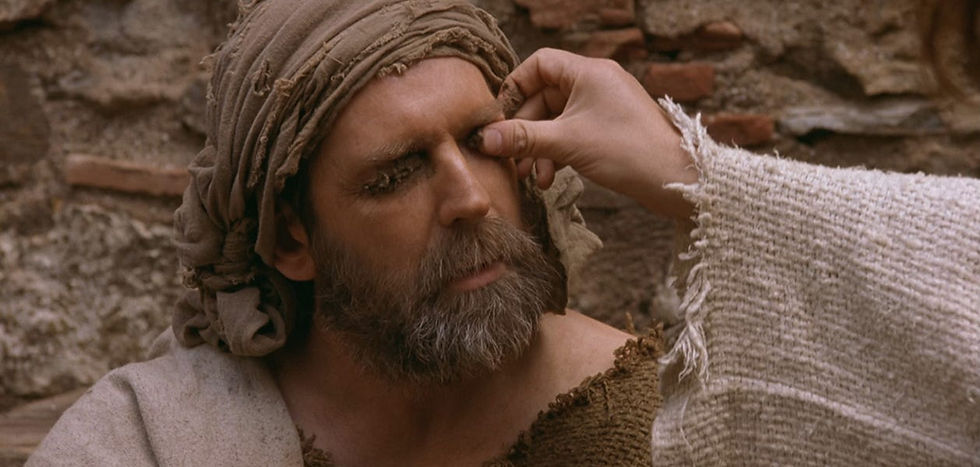
This weekend’s Gospel surfaces two very deep questions: What is the truth? and Who has control of the truth?
Entrance: Is 66:10-11 – “Rejoice, Jerusalem, and all who love her. Be joyful, all who were in mourning; exult and be satisfied at her consoling breast.”
First Reading: 1 Sm 16:1b, 6-7, 10-13a – “David is anointed as king of Israel.”
Psalm: Ps 23:1-3a, 3b-4, 5, 6 – “The Lord is my shepherd, there is nothing I shall want.”
Second Reading: Eph 5:8-14 – “Arise from the dead, and Christ will give you light.”
Verse: Jn 8:12 – “I am the light of the world, says the Lord; whoever follows me will have the light of life.”
Gospel: Jn 9:1-41 – “The man who was blind went off and washed himself and came back able to see.”
Communion: Jn 9:11, 38 – “The Lord anointed my eyes: I went, I washed, I saw, and I believed in God.”
So, think about it. Have you ever prayed for something, and then when it happens you convince try yourself that it was a natural consequence for which God played no part? Although sometimes our prayers do not seem to be answered, at other times we have no doubt that we have received a healing, or our needs were heard and answered. For example, after much prayer, a risky pregnancy may end in a healthy baby. You might pray for a new job, and right after prayer, the phone rings with a job offer. I think we all struggle, at times. And I think we all can admit that God intervenes and hears our prayers. At the very least, I hope we can. This weekend’s Gospel and the lesson about the man born blind teaches us … should teach us … that we all struggle with unbelief. Staying faithful means believing we have been healed or can be healed.
This weekend, the Scrutinies continue for those who will join us across the Diocese at Easter. In these scrutinies, we place Jesus at the center of our faith, the same faith all of the Catechumens will embrace. Today’s Gospel shows us Jesus, the Light of the World, bringing light to a man born blind.
And so, were you paying attention as the Gospel was read today? Another long one, right? Remember, it’s Lent … long Gospels are a part of that … culminating with the Passion on Palm Sunday. Well, if you were really listening, then it should seem to all of you that this Gospel takes the form of a sandwich. The beginning describes a blind man. And the end tells us about Jesus and this man. The meat, however, the most important part, is the stuff in the middle: four incidents when it seems individuals are put on trial. And so, in answering the two questions I first asked all of you: What is truth? and Who has control of the truth? ... we begin have important implications for the faith of this man born blind and for our faith, as well. Staying faithful to these questions means believing that at one time or another, we all have been healed.
In looking at this Gospel, we see several trials that point to disbelief: the first one occurs not in a courtroom before a judge ... but happens right after the man has been healed, taking place in his own home. When the cured man goes home and tells his friends about his healing, they don’t believe him. Instead, they alert the religious authorities. This man ... this witness of faith must now tell the truth ... his truth. The next trial occurs before authorities who will not tolerate the story of the man born blind. Because they believe they know how God acts in the world, they therefore conclude … they therefore think that this man must be lying. By rejecting his story, they also reject God’s invitation to a deeper faith. And because he won’t recant ... because he won’t deny his story ... the authorities need verification … and in this case, it’s from the man’s parents. The authorities want them to say that this man is lying. The parents have only to tell the authorities what they want to hear, but they refuse to do that. So, the authorities have no choice but to bring the man born blind back in for more questioning, this time demanding that he to admit to lying. Although no one will support him, he sticks to the truth. Disgusted, the authorities throw him out. Instead of welcoming this man into the community, they turn him out.
And what does Jesus do when he hears of the man’s expulsion from the temple? Jesus goes to him. Jesus seeks him out and says, “Do you believe in the Son of Man? … You have seen Him, and the one speaking with you is He.” And the man born blind worshipped him.
So, what do we learn from this weekend’s Gospel? When we live in the truth of what God does in our lives, we are baptized into Christ, just like the man born blind. And so, we become Christ’s witnesses. And if we do not live in the truth of what God does in our lives, then we are like the Pharisees ... “Surely we are not also blind, are we?”
This explains the importance of scrutinizing the candidates and ourselves during Lent. This is not a test but rather an invitation into our experience of a God who always remains faithful through our trials. Our community ... formed by the Gospel ... asks us to accept the responsibility as the baptized to do, in our unique ways, in what Jesus did. We are witnesses of God’s healing action in our lives. And we do all of this so that we can be sent forth to give water, light, and life to a world that needs it very badly … the world needs the unique incarnation of Christ we are becoming.
As our Lenten journey has passed the halfway point, we pray that the Lord may continue to open our eyes to what we need to see, to heal us of our blind spots, and to acknowledge the sins we overlook. May we look at each other the way God looks at each of us … with love and with mercy, because God desires more for us than we could ever imagine. And may the grace of the Eucharist transform us to lead lives as children of light ... “for light produces every kind of goodness and righteousness and truth ... Learn what is pleasing to the Lord.”


Comments